
If you want to understand how nutrition affects your skin, it is not enough to focus on individual foods. What matters is how ingredients interact and which processes they trigger in your body. This is exactly where this beetroot spread comes in.
It deliberately combines ingredients that can influence your gut microbiome, your blood sugar, and inflammatory processes. And these three levels are closely connected to your skin.
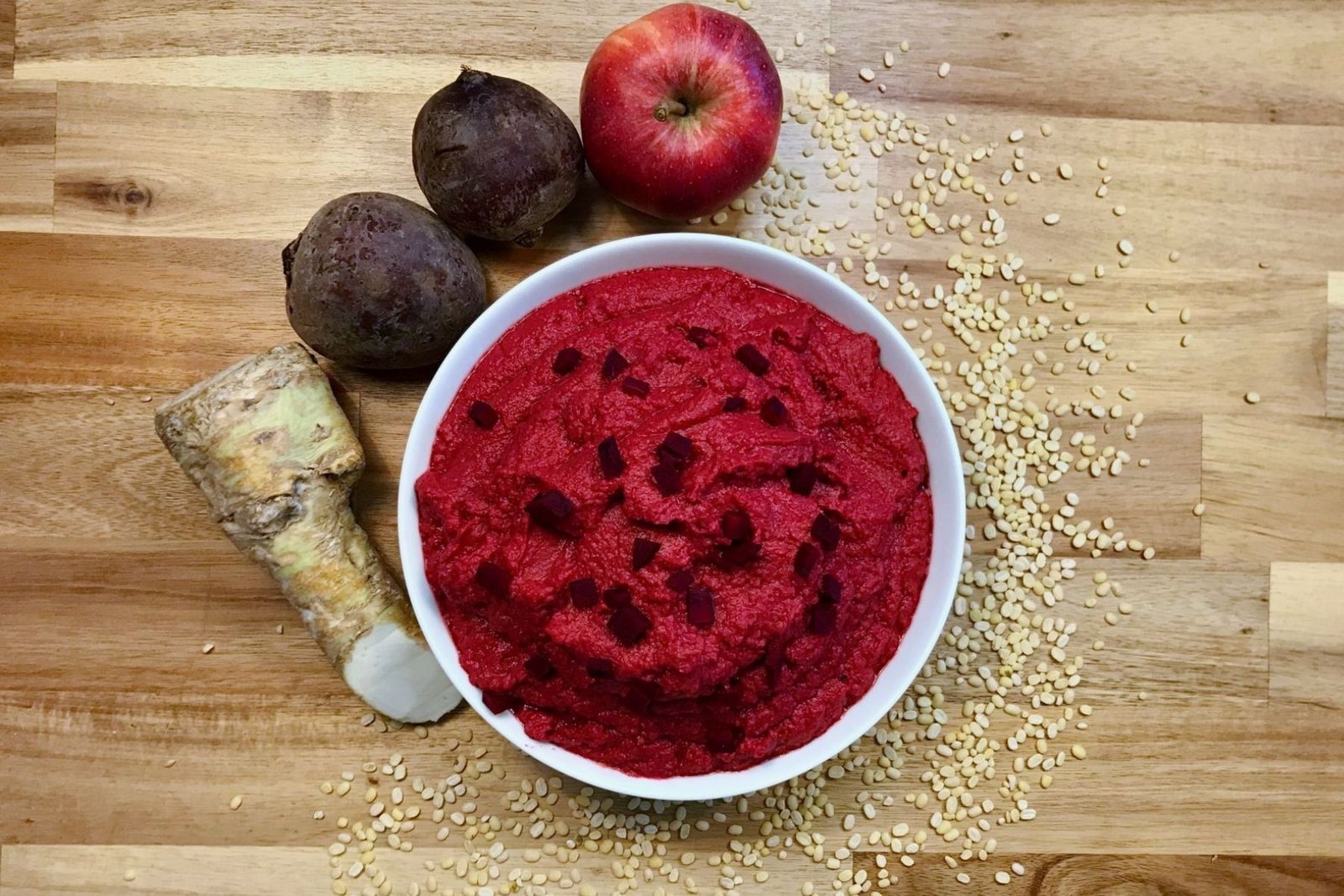
Why a spread is more than just a topping
At first glance, a spread is simply a meal. In reality, however, it directly affects systems that regulate your skin. Your gut determines how well you absorb nutrients. Your blood sugar influences hormonal signaling pathways. And inflammatory processes directly affect your skin.
If you stabilize these levels, your skin often changes as well. Not immediately and not in isolation, but as part of a broader context.
Mung beans: gut, blood sugar, and skin
The base of this spread is peeled and split mung beans. They provide plant-based protein and fiber that are fermented in the gut. This produces short-chain fatty acids that can support your intestinal lining and regulate inflammation.
At the same time, they promote a more stable blood sugar response. This is relevant because strong fluctuations in blood sugar can influence hormonal processes that are associated with sebum production and inflammatory acne.
Peeled mung beans are particularly well tolerated because they contain fewer hard-to-digest components. This relieves your digestive system and reduces potential irritation in the gut.
Beetroot: antioxidant protection and circulation
Beetroot is the central ingredient of this spread. It contains secondary plant compounds, especially betalains, which act as antioxidants. These compounds help your body manage oxidative stress.
Oxidative stress plays a role in inflammatory processes in the body. If your body is continuously exposed to it, this can also be reflected in your skin.
In addition, beetroot provides fiber that supports your gut microbiome. And this microbiome, in turn, influences immune responses, inflammation, and hormonal processes.
The included beetroot powder further increases nutrient density. It acts as a concentrated form of fresh beetroot and enhances its antioxidant effect.
Flaxseed oil: omega-3 and inflammation regulation
A key difference from many conventional spreads is the use of flaxseed oil. It provides alpha-linolenic acid, a plant-based omega-3 fatty acid.
Omega-3 fatty acids are involved in the regulation of inflammation. They influence the production of signaling molecules that can be either pro-inflammatory or anti-inflammatory.
Since many dietary patterns contain an excess of omega-6 fatty acids, a targeted balance with omega-3 can play an important role. This balance affects not only your skin, but your overall inflammatory state.
Horseradish: pungency, circulation, and microbial balance
Horseradish contributes not only flavor but also functional properties to the spread. It contains mustard oils that may have antimicrobial effects and can therefore indirectly influence your gut environment.
At the same time, it promotes circulation and stimulates digestive processes. This can improve nutrient absorption and activate your digestive system.
Its pungency is tolerated differently from person to person. Especially if you are sensitive, you should pay attention to your own body’s response.
Lemon juice and apple: digestion and mineral absorption
Lemon juice supports the absorption of certain minerals in the gut and at the same time helps regulate your pH level in the digestive tract.
The apple provides additional fiber and natural fruit acids. These can support digestion while also serving as a substrate for gut bacteria.
This combination does not act in isolation but enhances the effects of the other ingredients. This is where the actual value of this spread emerges.
Psyllium husks: gut barrier and satiety
Psyllium husks bind water and form a gel-like structure in the gut. This can mechanically support your intestinal lining and slow digestion.
This leads to more stable nutrient absorption and a more balanced blood sugar response. At the same time, they serve as a food source for specific gut bacteria.
A stable gut barrier is crucial because it determines which substances enter your body and how strongly your immune system is activated.
Why this combination matters
The individual ingredients do not act independently. They interact and influence key systems at the same time: your gut microbiome, your blood sugar regulation, and inflammatory signaling pathways.
This interaction is what determines how your body responds to nutrition. And therefore how your skin develops.
What you can take away from this
This spread shows that it is not about individual “good” or “bad” foods. What matters is how you combine ingredients and which processes you trigger in your body.
Acne is not an isolated skin issue. It develops through the interaction of the gut, hormones, inflammation, and individual reactions to foods. That is exactly why it is not enough to focus on single foods or follow generalized rules.
The E-Book explains in more detail which mechanisms are truly decisive and how to structure your nutrition so that it fits your body. Because often it is not the obvious factors, but the underlying connections that make the difference.
Beetroot Cream

Equipment
- 1 Sieve
- 1 Small saucepan
- 1 Cutting board and knife
- 1 Citrus press
- 1 blender
Ingredients
- 60 g mung beans peeled and halved
- 150 ml water
- 250 g beetroot cooked
- 60 g apples sweet or sour
- 20 g horseradish fresh
- 4 tbsp linseed oil
- 1 tbsp lemon juice freshly squeezed
- 1 tsp psyllium husks heaped
- 1 tsp beetroot powder heaped
- ½ tsp salt
Instructions
- Rinse the peeled and halved 60 g mung beans under a sieve until the water runs clear. Boil mung beans with 150 ml water in a saucepan and simmer for 12-15 minutes.
- Remove the 250 g beetroot from the packaging and discard the juice. Cut the beetroot into small pieces and set aside.
- Drain the mung beans in a sieve and squeeze out excess liquid.
- Then finely puree the mung beans and beetroot with 60 g apples, 20 g horseradish, 4 tbsp linseed oil, 1 tbsp lemon juice, 1 tsp psyllium husks, 1 tsp beetroot powder and ½ tsp salt in a blender.


Your article helped me a lot, is there any more related content? Thanks!
Your point of view caught my eye and was very interesting. Thanks. I have a question for you. https://accounts.binance.info/register-person?ref=IHJUI7TF
I don’t think the title of your article matches the content lol. Just kidding, mainly because I had some doubts after reading the article. https://www.binance.info/register?ref=IHJUI7TF