
Classic paella stands for intense flavor – but often also for heavy, hard-to-digest ingredients. Meat, seafood, and long holding times can burden your body and are not always well tolerated, especially if you have sensitive skin or histamine-related issues.
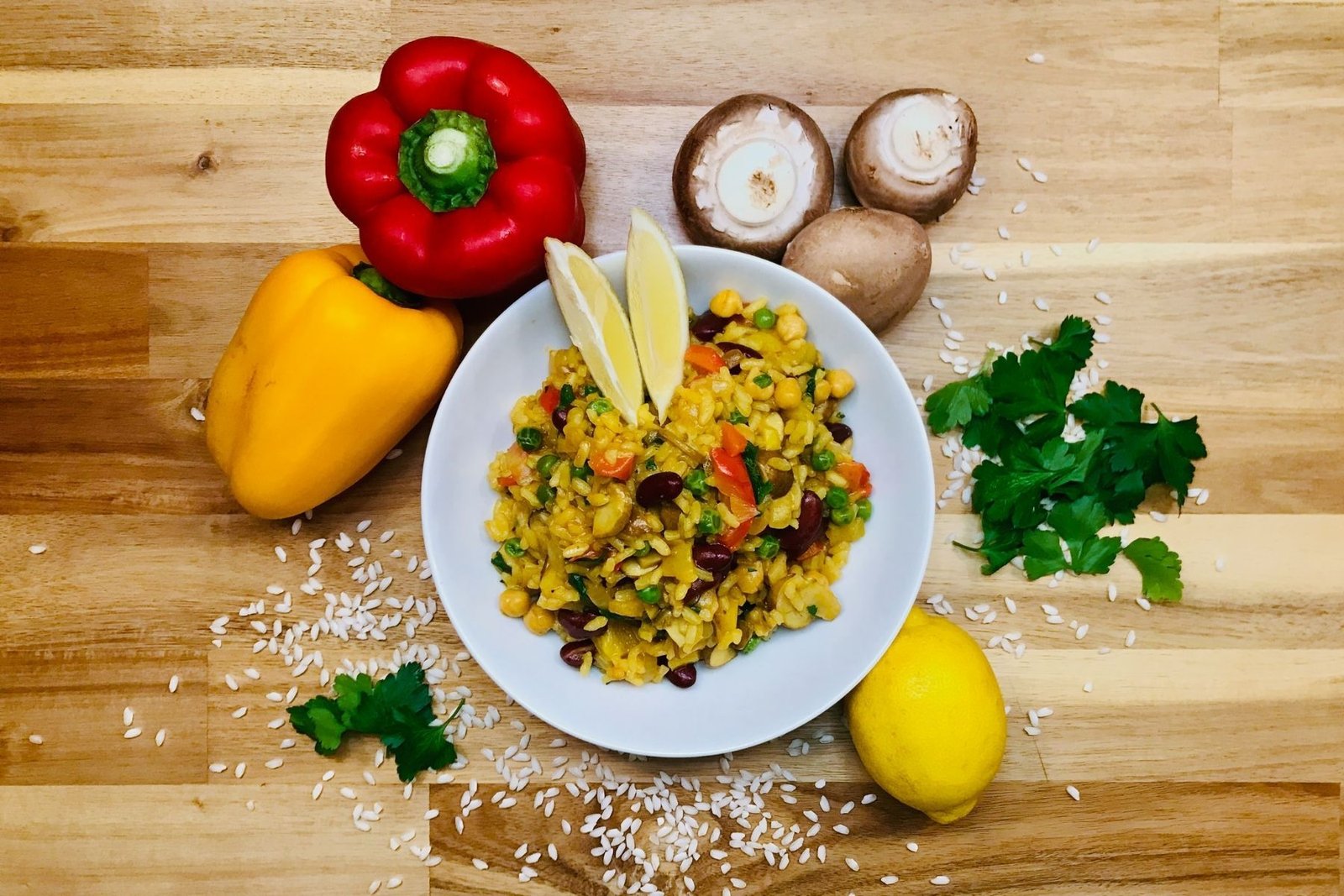
This vegan veggie paella takes a different approach. It relies on plant-based ingredients, fresh vegetables, and a combination of rice and legumes that not only keeps you full but also interacts deeply with your metabolism. This is where the difference begins: you are not just eating a meal – you are actively influencing how your body responds to food.
Why this vegan paella indirectly affects your skin
Your skin is not an isolated organ. It responds to what happens in your gut, how stable your blood sugar is, and how active inflammatory processes are in your body. This dish targets exactly these levels.
The base consists of risotto rice, combined with chickpeas, kidney beans, and green peas. This combination changes how quickly glucose enters your bloodstream. Instead of a rapid spike, a more stable energy supply develops. This reduces strong insulin peaks – a factor that can play a role in hormonal skin processes.
At the same time, legumes provide fiber that is fermented in the large intestine. This process produces short-chain fatty acids that can stabilize your gut lining and modulate inflammatory processes. This mechanism directly links nutrition to skin processes.
Gut microbiome: the silent influence behind your skin
A stable gut determines how well your body can absorb nutrients and how actively your immune system responds. If this balance is disrupted, inflammatory processes can develop that also become visible in your skin.
The fiber from chickpeas, beans, and peas serves as a food source for specific gut bacteria. These bacteria produce metabolic byproducts that not only strengthen the gut barrier but also influence signaling pathways in the immune system.
This means concretely: through your nutrition, you influence how permeable your gut lining is, how strongly your immune system reacts, and how high your baseline level of inflammation is. These factors are closely linked to skin impurities.
Vegetables and micronutrients: more than just a side
The combination of bell peppers, mushrooms, onion, and fresh parsley provides a wide range of micronutrients and secondary plant compounds. Bell peppers contain vitamin C, which is involved in collagen formation and also acts as an antioxidant.
Mushrooms provide minerals and support enzymatic processes in your metabolism. Onions contain sulfur compounds that are involved in detoxification processes. These processes primarily take place in the liver – an organ closely connected to your skin.
If these systems are overloaded, this can indirectly show in your skin. Nutrition does not act in isolation here but influences entire metabolic pathways.
Lemon and nutrient utilization
An often underestimated component is lemon. It not only adds freshness to the dish but also affects the bioavailability of certain minerals. Vitamin C can improve the absorption of iron from plant-based sources.
This may seem minor, but it has far-reaching effects. Adequate micronutrient supply is essential for cell regeneration, skin renewal, and antioxidant defense mechanisms.
Spices, inflammation, and tolerance
The spices in this paella are deliberately mild. Turmeric, paprika powder, and a balanced spice blend provide flavor without additionally stressing your body.
Turmeric is associated in research with inflammation-modulating effects. However, what matters is not a single compound, but the interaction of all components within the dish.
Especially if you have sensitive skin or histamine-related issues, this mild, plant-based combination can make a difference because it does not add additional strain to your body.
Alcohol and skin: why less is often more
An optional component is white wine. Alcohol acts as a toxin in your body and is primarily metabolized in the liver. This means that other metabolic processes temporarily take a back seat.
At the same time, alcohol can affect the gut barrier and intensify inflammatory processes. If you are sensitive, it is worth taking a closer look here or omitting the wine.
If you do use it, a small amount can be sufficient for flavor. What matters is not abstinence, but your understanding of its effects.
Satiety, blood sugar, and skin reactions
This veggie paella provides satiety differently than many classic dishes. The combination of complex carbohydrates, fiber, and plant-based protein ensures a stable energy supply.
This prevents strong blood sugar fluctuations. These fluctuations are linked to hormonal processes that can, in turn, influence sebum production and inflammation.
You can see: a single dish does not change everything. But it acts on several key mechanisms at the same time.
Conclusion: why nutrition is more complex than it seems
This vegan veggie paella shows how closely nutrition, gut health, blood sugar, and skin are connected. At the same time, it becomes clear that there is no single food that improves or worsens your skin. What matters is always the interaction of many factors.
This is where the real question begins: which mechanisms are actually active in your body? What role do your gut, your hormones, or potential intolerances play?
The E-book explores these connections in more depth – not only on a recipe level, but on a physiological level. You will learn how to structure your nutrition individually, avoid common mistakes, and find your own approach.
Vegan Veggie-Paella with Legumes

Equipment
- 1 Cutting board and knife
- 1 Sieve
- 1 Large wok pan
- 1 Citrus press
Ingredients
- 2 bell peppers yellow and red
- 1 onion snow-white
- 350 g mushrooms from the jar
- 2 tbsp coconut oil native
- 1 tbsp soup seasoning see basic recipe
- ½ tsp turmeric ground
- 1 tsp paprika powder sweet
- 2 tsp ayurvedic spice blend see basic recipe
- 1 tbsp salt
- 300 g risotto rice
- 100 ml white wine low-histamine variety, e.g. Grüner Veltliner
- 800 ml water
- 100 g green peas frozen
- 100 g kidney beans cooked and drained
- 100 g chickpeas cooked and drained
- 1 lemon
- 20 g parsley fresh
Instructions
- Wash, pit and finely dice the 2 bell peppers. Peel the 1 onion and chop finely. Drain and wash the 350 g mushrooms.
- In a large pan, heat the 2 tbsp coconut oil on the highest level and sear the vegetables in it. Season with 1 tbsp soup seasoning, ½ tsp turmeric, 1 tsp paprika powder, 2 tsp ayurvedic spice blend and 1 tbsp salt.
- Add the 300 g risotto rice and fry briefly, then deglaze with 100 ml white wine. Add the 800 ml water and bring everything to a boil. Reduce the heat and simmer covered on low for about 20 minutes.
- Wash the 100 g green peas, 100 g chickpeas and 100 g kidney beans and place them in a bowl. After about 15 minutes, add the legumes and simmer for another 5 minutes so that the peas are tender and soft, but still green and crunchy.
- Meanwhile, halve the 1 lemon. Squeeze one half and cut the other into wedges. Wash the parsley, shake dry, pluck off the leaves and chop finely. After 5 minutes, season the paella with lemon juice and stir in the 20 g parsley. Serve with the lemon wedges.


1 thought on “Vegan Veggie Paella: skin-friendly & nutrient-rich”