
Many classic burgers consist of ingredients that your body struggles to process. Low-quality fats, highly processed protein sources, and additives can influence processes in your body that go far beyond digestion. Especially if you have acne-prone skin, it is worth taking a closer look at what you regularly eat.
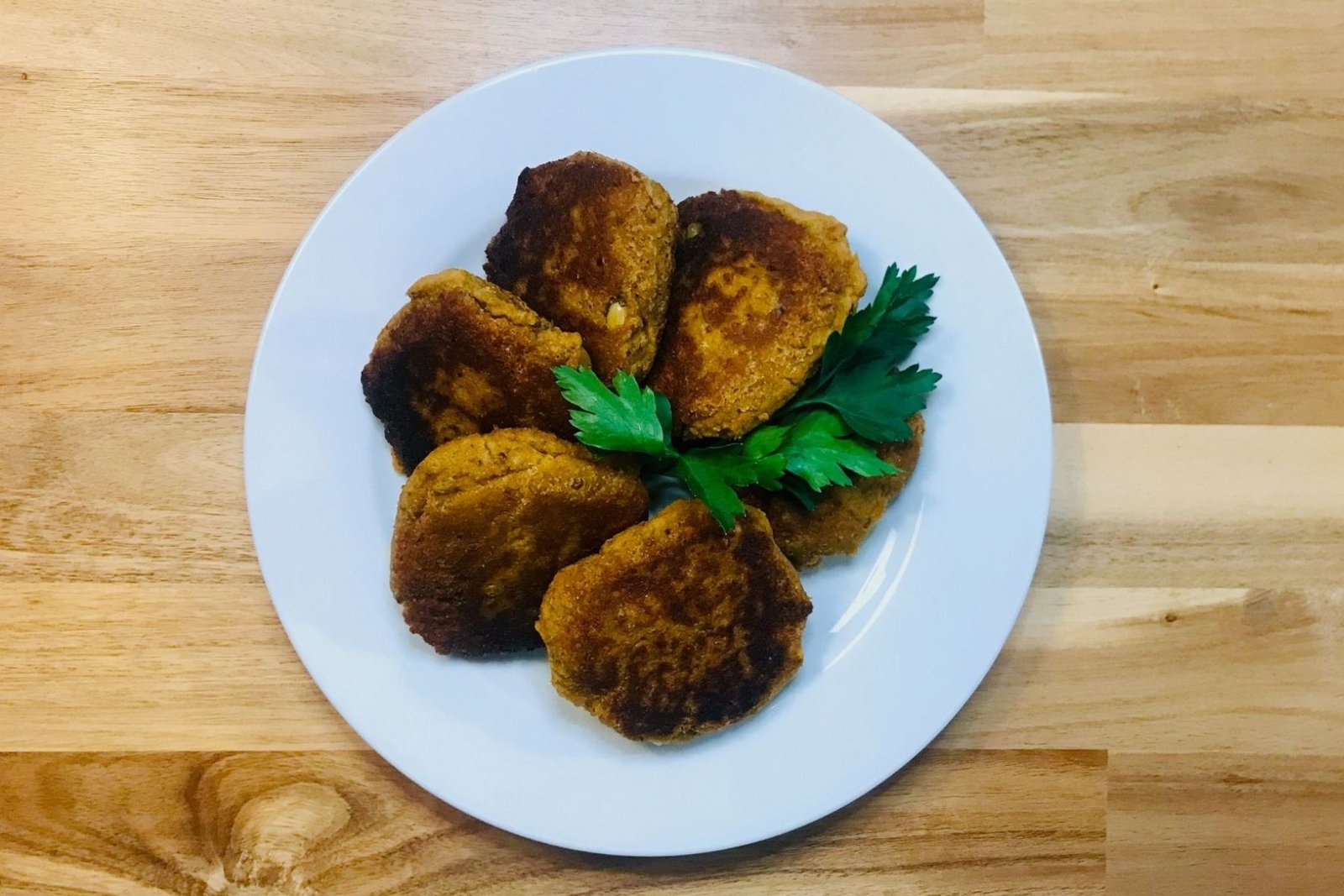
These mung bean patties show that there is another way. They consist of a few clear ingredients that not only satisfy but also act on multiple levels in your body. This is exactly where the difference begins: it is not individual foods that matter, but the processes they trigger in your body.
Why mung beans are so interesting for your skin
Mung beans provide plant-based protein that your body uses for repair processes. Amino acids are building blocks for skin structure, enzymes, and hormonal signaling pathways. What matters here is not only the amount, but also digestibility.
Compared to many other legumes, mung beans are considered particularly easy to digest. This means your gut has to compensate less. And this is where an important connection emerges. If your gut is under less strain, the likelihood decreases that undigested components lead to fermentation processes, which in turn can promote inflammation.
A stable gut directly affects your skin. Your gut determines how well nutrients are absorbed and how strongly inflammatory processes are activated in your body. If this balance is disrupted, it can also become visible in your skin.
Flaxseeds and millet: what this has to do with your digestion
Flaxseeds serve a dual function in this recipe. They bind the mixture, replace the egg, and at the same time provide fiber. This fiber is not only relevant for your digestion, but also for your gut microbiome.
Gut bacteria use fiber as an energy source. In the process, short-chain fatty acids are produced that stabilize your intestinal lining. A stable gut barrier is crucial because it prevents unwanted substances from entering your bloodstream and amplifying inflammatory processes there.
Millet flakes complement this effect. They provide complex carbohydrates and minerals that your body needs for metabolic processes. Particularly interesting here is their role in energy metabolism. When your blood sugar remains stable, hormonal fluctuations that may be associated with acne-prone skin are reduced.
Onions and spices: underestimated influencing factors
The white onion is deliberately chosen in this recipe. It is considered milder and is often better tolerated than other types of onions. This can be particularly relevant if your body is sensitive to certain biogenic amines.
Intolerances often do not manifest in obvious ways. They do not always show up directly in the gut but can appear indirectly—for example through the skin. This is exactly why individual tolerance plays such an important role.
The spices are also deliberately kept mild. Caraway supports digestion by reducing the formation of gas. Paprika, basil, marjoram, and coriander provide secondary plant compounds that act on a cellular level. Many of these compounds interact with oxidative processes and may help support a balance between free radicals and antioxidant defense mechanisms.
Why the right fat is crucial
An often underestimated factor is the choice of fat for cooking. In this recipe, coconut oil is used. The reason lies in its structure. Coconut oil consists mainly of saturated fatty acids, which remain stable when heated.
Many plant-based oils, on the other hand, contain a high proportion of polyunsaturated fatty acids. These react sensitively to heat. In the process, oxidative degradation products can form, which may promote inflammatory processes in your body.
These processes are not directly visible, but they influence your internal environment. Oxidative stress is a factor that is repeatedly discussed in research in connection with skin problems. What matters, therefore, is not only what you eat, but also how you prepare it.
More than just a patty: effects within the whole system
If you look at these mung bean patties, they may initially seem like a simple side dish. In reality, however, they act on multiple levels at once. They provide well-usable protein, support your gut microbiome, stabilize your blood sugar, and reduce potential inflammatory burdens through the right choice of fat.
This is where a central principle becomes clear: skin problems rarely arise from a single factor. Much more often, they result from the interaction between digestion, hormonal balance, inflammation, and individual tolerance.
That is why it makes a difference whether you simply eat “healthy” or whether you understand how individual foods affect your body.
Conclusion: why simple recipes are often the best approach
These mung bean patties are not a miracle cure. But they show how nutrition can be structured when you consider connections instead of following isolated rules.
The topic of nutrition and acne is complex. Your gut, your hormonal balance, inflammatory processes, and possible intolerances all interact. That is exactly why generalized dietary advice often does not work.
The E-book explains in more detail which mechanisms really matter, how you can structure and adapt your nutrition individually, and which mistakes many people make without realizing it. Perhaps this is exactly where your perspective on nutrition and skin begins to change fundamentally.
Mung Bean Patties

Equipment
- 1 Cutting board and knife
- 1 blender
- 1 Frying pan
Ingredients
- 100 g organic mung beans dried
- 1 onion snow-white
- 30 g linseeds
- 100 g millet flakes
- 1 tbsp smoked paprika powder
- 1 tbsp sweet paprika powder
- ½ tsp real caraway ground
- 2 tsp soup seasoning see basic recipe
- 1 tsp basil ground
- 1 tsp marjoram ground
- 1 tsp coriander ground
- ½ tsp salt
- 2 tbsp coconut oil native
Instructions
- Germinate 100 g organic mung beans according to the instructions in the basic recipe. Alternatively, the mung beans can also just be soaked and then processed.
- Roughly chop the 1 onion.
- Blend the mung beans and onion with 30 g linseeds, 100 g millet flakes, 1 tbsp smoked paprika powder, 1 tbsp sweet paprika powder, ½ tsp real caraway, 2 tsp soup seasoning, 1 tsp basil, 1 tsp marjoram, 1 tsp coriander and ½ tsp salt in a blender until you get a homogeneous and malleable mass. Let the mixture swell in the fridge for at least 30 minutes until the flaxseeds have absorbed the liquid.
- Form patties with your hands and fry in a pan with 2 tbsp coconut oil on both sides over medium heat until the oil is absorbed and the patties are golden brown in color.
Notes
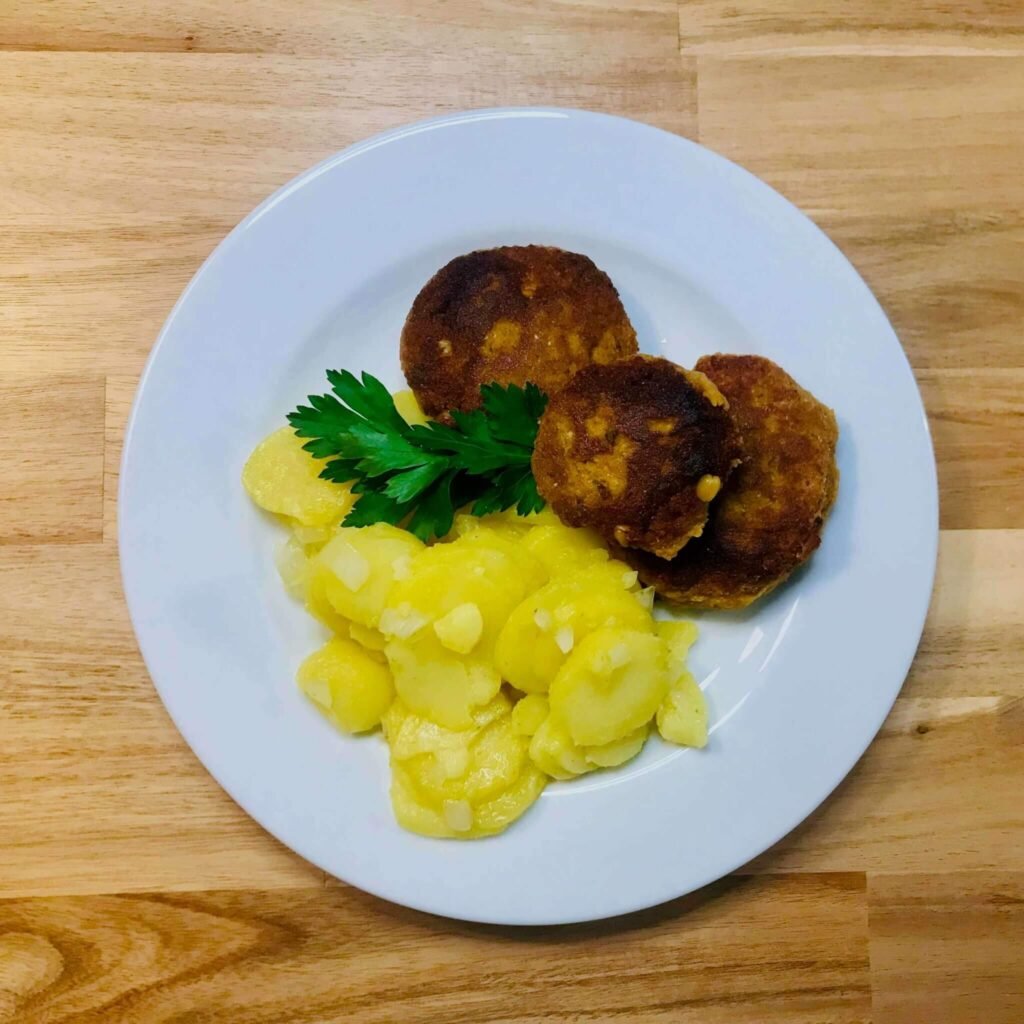
The Mung Bean Patties taste great with the Swabian Potato Salad.
Nutrition


I don’t think the title of your article matches the content lol. Just kidding, mainly because I had some doubts after reading the article.
Your point of view caught my eye and was very interesting. Thanks. I have a question for you. https://www.binance.info/register?ref=IHJUI7TF
Your point of view caught my eye and was very interesting. Thanks. I have a question for you.