
Many people reach for ready-made spreads when they need something quick. That is often where the problem begins. Industrial products frequently contain ingredients that can unnecessarily burden your system – vinegar, highly processed oils, or additives. Especially if your skin reacts sensitively, it is worth taking a closer look.
A homemade artichoke spread starts exactly here. It is based on a few clear ingredients that are deliberately selected. Not to eat perfectly, but to give your body conditions in which it can function in a stable way. This stability is often reflected in your skin as well.
Why histamine can play a role in acne
Histamine is not an “enemy.” Your body produces it itself and uses it as a signaling molecule. It only becomes problematic when there is more histamine in the system than your body can break down. That is when reactions occur – not only in the gut, but also on the skin.
Typical skin reactions can include redness, itching, or inflammatory blemishes. What matters is not only how much histamine a food contains, but also how it has been processed. Fermentation, long storage, or vinegar can increase histamine levels.
That is why one detail is crucial in this spread: the artichoke hearts and capers are deliberately chosen in brine – not in vinegar. This difference may seem small, but it significantly changes the biogenic amine load and therefore your body’s response.
Your gut plays a central role here. If histamine is broken down more slowly in the gut, the overall load in your body increases. Inflammatory processes can be amplified as a result – a mechanism that is also discussed in the context of acne.
Artichokes and the connection between liver and skin
Artichokes are among the foods that are often underestimated. They contain bitter compounds that directly influence digestive processes. These bitter compounds stimulate the production of digestive juices and thereby affect how efficiently your body processes food.
Part of these processes runs through the liver. It is central to hormone metabolism and breaks down both endogenous and exogenous substances. If the liver is continuously burdened, this can affect inflammatory processes in your body – and therefore also your skin.
The bitter compounds in artichokes act precisely at this point. They support digestion and can indirectly help relieve metabolic processes. This is not a quick effect, but a long-term relationship. Changes in the skin rarely occur in isolation – they are often an expression of internal processes.
Capers: small ingredients with high antioxidant density
At first glance, capers seem unremarkable. At the same time, they provide a high concentration of secondary plant compounds and polyphenols. These substances play a central role in how your body deals with oxidative stress.
Oxidative stress arises when free radicals predominate. These can attack cellular structures and intensify inflammatory processes. This mechanism is repeatedly described, especially in inflammatory acne.
Antioxidant plant compounds act as counteragents. They stabilize cellular processes and influence inflammatory signaling pathways. What matters is not a single compound, but the interaction of many small components in your diet.
Healthy fats and their effect on inflammation
An often underestimated factor in spreads is the type of fat used. Many ready-made products contain oils with a high proportion of omega-6 fatty acids. When imbalanced, these can intensify inflammatory processes in the body.
In this recipe, olive oil or alternatively flaxseed oil is used deliberately. Both provide fatty acids that interact differently with metabolism. Omega-3 fatty acids from flaxseed oil in particular are known to modulate inflammation.
These fats are incorporated into cell membranes and influence which signaling molecules your body produces. As a result, they do not act directly on your skin, but on the processes behind it.
Lemon, spices, and digestion as an underestimated factor
A splash of lemon juice may seem insignificant. In fact, it affects digestion on multiple levels. Acids stimulate the production of digestive juices and can improve the absorption of certain nutrients.
Spices such as oregano and paprika powder also provide secondary plant compounds. They do not act in isolation, but in interaction with other components. This interaction is what makes the difference between a purely filling meal and a functional diet.
Digestion is not a side issue. Your gut determines which nutrients are actually absorbed. If gut function is impaired, even a good diet cannot fully unfold its potential.
Acid-base balance and skin health
Artichokes, lemon juice, and many plant-based ingredients have an alkalizing effect on metabolism. This does not mean they directly change the pH value of your blood. Rather, they influence how your body processes and excretes acids.
A consistently high acid load is associated with various burdens in the body. These include inflammatory processes. An alkaline-oriented diet cannot “heal” these processes, but it can shift underlying conditions.
This perspective is particularly relevant for skin concerns. Your skin is not an isolated organ. It responds to hormonal signals, to inflammation, and to what is happening in your gut.
Why homemade spreads make a difference
When you prepare spreads yourself, you change more than just the ingredient list. You consciously decide which fats you use, how fresh your ingredients are, and which additives are completely eliminated.
Many industrial products contain combinations that your body first has to process. Emulsifiers, preservatives, or highly processed oils interfere with processes that are often underestimated – especially in the gut.
A simple spread like this reduces that burden. Not because it is “perfect,” but because it remains clear and transparent.
What you can really take away from this recipe
An artichoke spread is not a miracle cure for acne. But it shows how nutrition can work: consciously, reduced, and with an understanding of underlying connections.
Your skin does not respond to a single food. It responds to a system involving your gut, hormones, inflammation, and individual intolerances. That is exactly why simple answers rarely lead further.
If you want to understand more deeply which mechanisms are truly decisive and how you can structure your nutrition in a targeted way, you will eventually reach limits. This is exactly where the e-book comes in. It shows how gut, hormones, and inflammation interact, which mistakes many people make, and how you can find your own path.
Artichoke Cream

Equipment
- 1 Cutting board and knife
- 1 Citrus press
- 1 blender
Ingredients
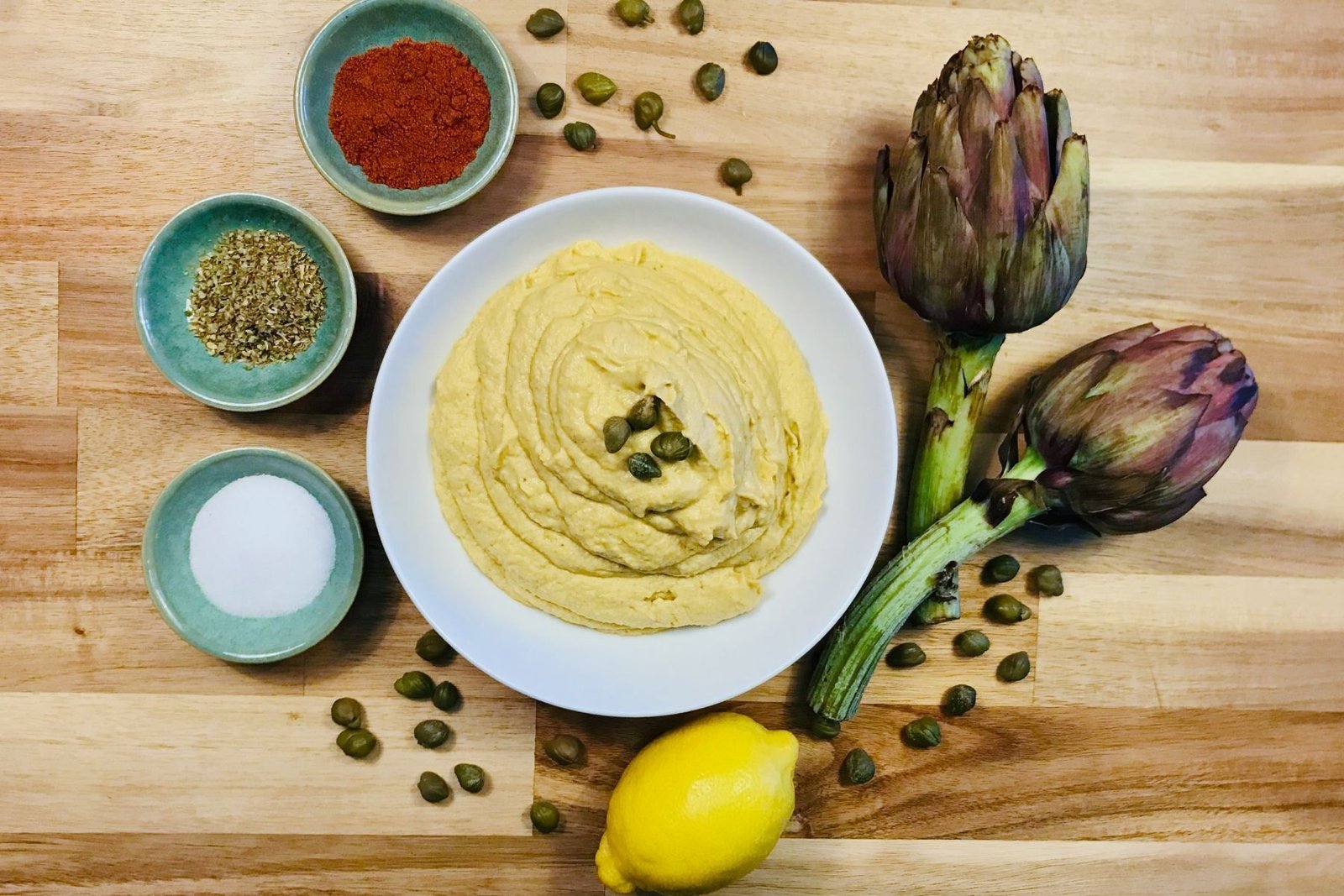
- 240 g artichoke hearts drained, in brine
- 1 tbsp capers in brine
- 4 tbsp olive oil mild
- 1 tbsp lemon juice freshly squeezed
- ¾ tsp salt
- 1 tsp oregano ground
- 1 tsp paprika powder sweet
Instructions
- Cut the artichoke hearts into small pieces.
- Finely puree all ingredients in a blender.
- Scrape down the edges from time to time, working in smaller batches as needed if the blender isn’t powerful enough for the entire batch.


Thanks for sharing. I read many of your blog posts, cool, your blog is very good.
Can you be more specific about the content of your article? After reading it, I still have some doubts. Hope you can help me. https://accounts.binance.info/register-person?ref=IXBIAFVY
Thanks for sharing. I read many of your blog posts, cool, your blog is very good.