
If you are exploring acne nutrition, you probably think first of sugar, dairy, or gluten. Spices are often overlooked. Yet they directly influence processes that are crucial for your skin: digestion, inflammation regulation, hormonal balance, and even the activity of your immune system.
This is exactly where a skin-friendly spice blend comes in. Not as a miracle solution, but as targeted support for your system. While many classic spice blends have a strongly stimulating effect, this combination follows a different approach: it adds flavor without unnecessarily irritating your system.
Why spicy foods can affect your skin
Spicy ingredients such as chili or pepper activate receptors in the body that are linked to stress responses. In the short term, this can stimulate digestion. However, in a sensitive system, it can have the opposite effect. Your gut reacts with unrest, your mucous membranes become more permeable, and your immune system becomes more active.
A central mechanism involved is the activation of mast cells. These immune cells release substances such as histamine. If your body is already sensitive, this can trigger a chain reaction: increased inflammation signals, more irritation in the gut, and ultimately a greater burden on your skin.
Acne is not caused by a single food. But these processes can intensify existing imbalances.
Mild spices as a counterbalance to internal stress
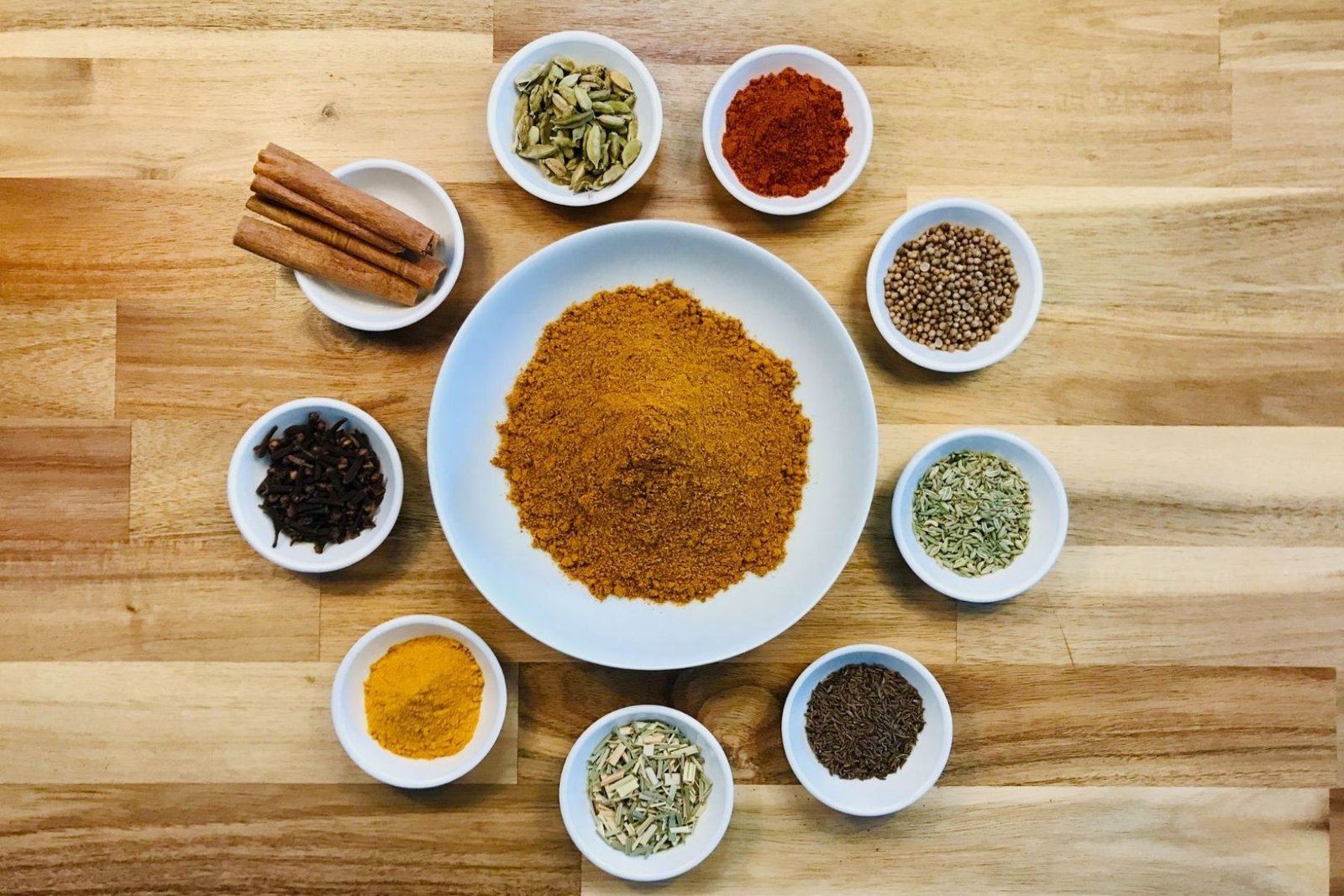
This skin-friendly spice blend is intentionally based on ingredients that do not irritate but regulate. That does not mean they are “weak.” On the contrary, many of these spices act deeply on metabolic processes—just in a more balancing way.
Turmeric provides curcumin, a compound studied in connection with inflammation-modulating processes. These processes play a central role in acne, as inflammatory signaling pathways can influence sebum production and skin responses.
Coriander and fennel seeds act on your digestive tract. They can help reduce tension in the gut and support the processing of food. This is crucial, because your gut forms the basis of nutrient absorption. When this process is disrupted, imbalances can arise more easily and also affect your skin.
Caraway also supports digestion, but is significantly milder than cumin. It assists the enzymatic processing of food without overloading your system.
The role of the gut and inflammation for your skin
Your gut is not an isolated organ. It is directly connected to your immune system, your hormonal balance, and your skin. When the gut environment becomes imbalanced, this can have various consequences: impaired nutrient absorption, increased inflammation activity, or altered immune responses.
Spices such as fennel, cardamom, and lemongrass act at this level. They do not directly influence your skin, but the processes upstream. They support calmer digestion, which in turn forms the basis for stable metabolic processes.
Cinnamon also plays a role in blood sugar metabolism. Strong blood sugar fluctuations affect insulin, and insulin is a key driver of hormonal processes that can be linked to acne.
Antioxidant spices and oxidative stress
Another important factor is oxidative stress. In this process, free radicals form in the body, which can damage cellular structures and intensify inflammation. This is where spices such as cloves, cinnamon, and turmeric come into play.
Cloves are among the spices with particularly high antioxidant capacity. Used in small amounts, they provide bioactive plant compounds that can support your system in regulating oxidative processes.
Paprika powder also contributes to this. It contains secondary plant compounds involved in antioxidant defense systems. The key factor here is using a mild variety that does not introduce additional irritation.
Why this spice blend is often well tolerated in histamine intolerance
If your body reacts sensitively to histamine, it is not only about avoiding histamine-rich foods. It is also about reducing triggers that promote histamine release.
Spicy ingredients can do exactly that. They activate immune cells, increase circulation, and heighten your system’s reactivity. Mild spices such as cardamom, fennel, or coriander act differently. They support regulation rather than activation.
This does not mean they “counteract histamine.” But they create an environment in which your body has less need to react strongly. And that can make a difference for sensitive skin.
What this spice blend actually changes
This spice blend does not act directly on your skin. It changes the conditions within your body. It influences how calm your digestion is, how strongly inflammation processes are triggered, and how stable your metabolism functions.
These indirect effects are often underestimated. Skin changes rarely occur in isolation. They are the result of many small processes working together.
When you begin to consciously influence these factors, you are not only changing your food. You are changing how your body responds to that food.
Why acne nutrition goes deeper than individual ingredients
This spice blend shows how subtle nutrition can be. At the same time, it makes clear that there is no simple solution. Acne is not caused by a single spice, and it does not disappear because of one. What matters is the interaction between your gut, hormones, inflammation, and individual responses.
This is where uncertainty often arises: which mechanisms are truly relevant? How exactly is your nutrition connected to your skin? And which factors might you still be overlooking?
The e-book explains these connections step by step. You learn which processes in the body are decisive, how to structure your nutrition individually, and why many approaches fall short. This understanding is where real change begins.
Ayurvedic Spice Blend

Equipment
- 1 blender
Ingredients
- 4 tsp turmeric ground
- 4 tsp coriander ground
- 4 tsp fennel seeds ground
- 2 tsp paprika powder sweet
- 2 tsp paprika powder smoked
- 2 tsp green cardamom ground
- 2 tsp real caraway ground
- 1 tsp cloves ground
- 1 tsp cinnamon ground
- 1 tsp lemongrass ground
Instructions
- Finely grind all spices and mix thoroughly in the blender.


Thanks for sharing. I read many of your blog posts, cool, your blog is very good.
Can you be more specific about the content of your article? After reading it, I still have some doubts. Hope you can help me.
Your article helped me a lot, is there any more related content? Thanks! https://www.binance.com/pt-PT/register?ref=KDN7HDOR
Your article helped me a lot, is there any more related content? Thanks! https://accounts.binance.com/register-person?ref=IXBIAFVY